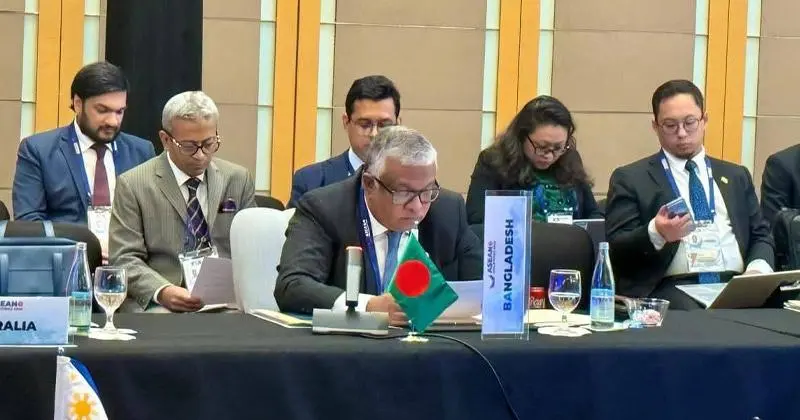
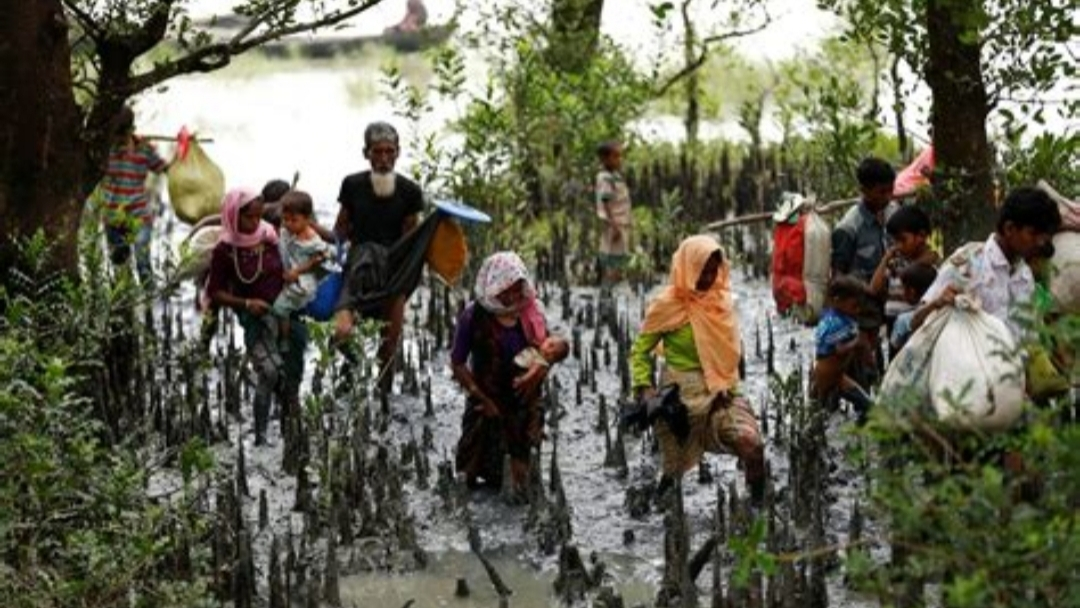
Bangladesh has urged the Association of Southeast Asian Nations (ASEAN) to play a bigger role in helping Rohingya refugees return safely and sustainably to Myanmar’s Rakhine State.
Foreign Secretary Asad Alam Siam made the call during the Senior Officials’ Meeting of the ASEAN Regional Forum held in Manila on Tuesday.
He said ASEAN should become more involved in efforts to ensure the successful repatriation of the Rohingya people to Rakhine State. He stressed that regional and international cooperation is needed to solve the long-running Rohingya crisis.
The Foreign Secretary also highlighted other challenges facing the region, including climate change, cyber security, and sustainable supply chains. He called for stronger cooperation among countries to address these issues.
On the sidelines of the meeting, Siam held separate discussions with officials from the Philippines and ASEAN. The talks focused on strengthening bilateral relations and Bangladesh’s effort to become a Sectoral Dialogue Partner of ASEAN.
The ASEAN Regional Forum is an important platform where member countries and partner nations discuss political and security issues in the Asia-Pacific region.
Sixteen Rohingya from Buthidaung Township have been detained by the Arakan Army (AA) after being sent back from Bangladesh, according to local residents and witnesses on June 7, 2026.
The group, which included women, elderly people, and infants, reportedly tried to cross the Naf River into Bangladesh by boat on the night of June 6. However, they were stopped and detained by Bangladesh Border Guard (BGB) personnel while attempting to enter the country.
Witnesses said that at around 5:00 a.m. on June 7, the group was returned to the Myanmar side of the border near Mingala Gyi village in Maungdaw Township.
After being sent back, the Rohingya group was left near the riverbank outside the border fence. As heavy rain continued to fall, they reportedly tried to enter the nearby village for safety. Shortly afterward, AA border guards detained them and took them to the Pyin Phyu Chaung Wa outpost at around 6:00 a.m.
Local residents said the group remains in custody at the outpost.
Witnesses also expressed concern about their condition. The group included breastfeeding babies and elderly people who needed walking sticks to move around.
Many had been exposed to heavy rain for hours and were reportedly suffering from cold weather and exhaustion.
“We saw small children and elderly people soaked by the rain. They looked very tired and weak,” said one local witness.
Another resident said, “The weather was very bad, and many of them were shivering from the cold. People are worried about their health.”
The situation has raised concerns among local residents, who say the detained Rohingya may need shelter, food, and medical assistance, especially the children and elderly members of the group.
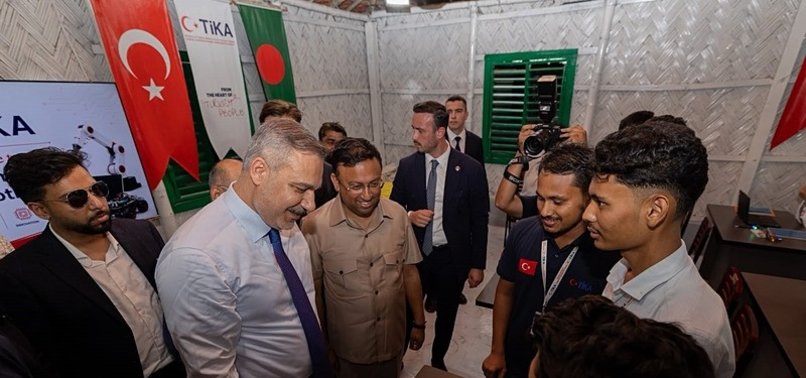
COX’S BAZAR — Turkish Foreign Minister Hakan Fidan visited Rohingya refugee camps in Cox’s Bazar on Friday, calling the ongoing situation a “humanitarian tragedy” and emphasizing the need for a permanent solution.
The visit was part of Fidan’s two-day official trip to Bangladesh. While touring a Turkish-established field hospital, Fidan praised the relentless efforts of healthcare workers and civil society organizations that have been providing essential medical services since the beginning of the crisis.
“Unfortunately, a humanitarian tragedy is unfolding here,” Fidan stated. “Türkiye’s helping hand has reached out here just as it has everywhere else… but we must transition from temporary solutions to a more sustainable one.”
Fidan expressed deep gratitude to the Bangladeshi government for opening its arms to more than 1 million Rohingya refugees, drawing a parallel to Türkiye’s own history of hosting millions of Syrian refugees fleeing war. He reaffirmed Türkiye’s continued commitment to delivering vital aid to the region while calling on the international community to work toward a lasting resolution for the displaced population.
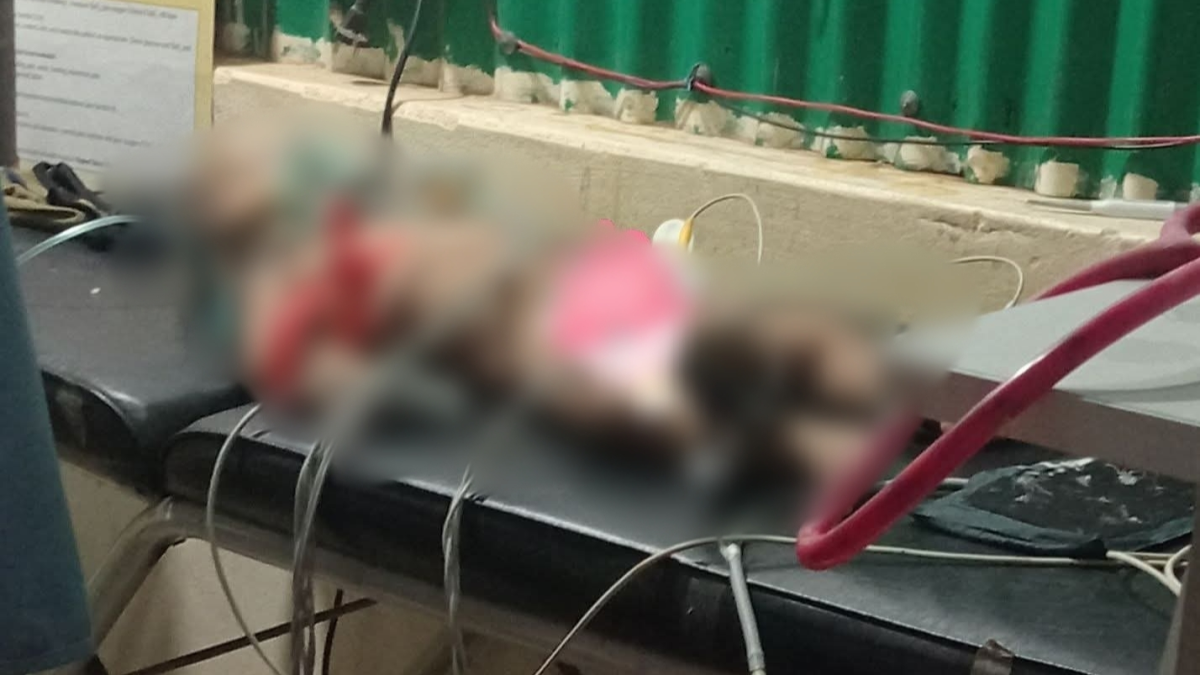
A tragic incident took place in Camp 19, Block C-9, where a two-year-old Rohingya child lost his life after accidentally falling into a water container.
The child, identified as Mohammed Raihan, was found unconscious after the incident. Family members and neighbors immediately tried to save him and rushed to provide assistance. However, despite their efforts, the young child could not be saved.
The incident has left the family and community in deep sorrow. Residents expressed concern about the dangers that open water containers can pose to small children, especially in crowded refugee camp conditions.
One neighbor said, “We are heartbroken. He was such a young child, and this is a painful loss for the family.”
Another resident added, “Parents and caregivers need to be extra careful around water containers and other hazards to prevent such tragedies.”
Community members have called for greater awareness about child safety to help prevent similar incidents in the future.
The death of Mohammed Raihan has brought sadness to many people in the camp, who are mourning the loss of the young child and offering condolences to his family.
A new market is being constructed on land that previously belonged to Rohingya families in Nanyarkone village in Buthidaung Township, according to local residents.
Sources from the area said the market is nearing completion and alleged that the land used for the project was taken from Rohingya owners without compensation.
Residents said the farmland belonged to Rohingya families before the area came under the control of the Arakan Army.
According to local sources, no compensation has been provided to the original landowners.
Residents also reported that authorities collected advance payments from Rohingya residents seeking to rent or obtain shop spaces in the new market.
According to villagers, applicants were required to pay 5 million kyats in advance before the market was completed.
Many Rohingya residents reportedly paid the amount in hopes of securing a shop and establishing a source of income through business activities.
One resident explained that the 5 million kyat payment was not the full price of a shop but an advance fee required to reserve a place in the market.
Local residents further alleged that since gaining control of several townships across Arakan State, the Arakan Army has taken control of properties previously owned by Rohingya families, including farmland, homes, and other assets.
Many Rohingya families who fled during fighting between the Myanmar Junta and the Arakan Army remain displaced and unable to return to their homes and agricultural land, according to community members.
Residents said concerns over property rights continue to grow as displaced Rohingya families remain uncertain about whether they will be able to reclaim their land in the future.
Community members said the issue highlights broader challenges facing Rohingya families who hope to one day return to their homes and rebuild their lives.
Myanmar’s crisis is often described through the language of politics and conflict. Headlines focus on military rule, armed resistance, sanctions, and diplomatic isolation. Yet beneath these visible struggles lies a quieter crisis unfolding in homes, factories, and workplaces across the country.
It is the story of a generation that is working harder than ever but moving nowhere.
For many young people in Myanmar today, the future has become something to endure rather than something to build. Stable employment no longer guarantees stability. Education no longer promises opportunity. Even migration, once viewed as an escape route, is increasingly beyond reach.
What is emerging is not simply an economic downturn. It is the gradual erosion of an entire generation’s ability to imagine a future.
Working Harder, Living Poorer
According to the United Nations Development Programme, nearly one in four young people in Myanmar is unemployed. Yet unemployment tells only part of the story.
For those fortunate enough to find work, wages often fail to keep pace with the rising cost of living. Across Yangon’s industrial zones, many factory workers earn around 500,000 kyats per month. While this may appear sufficient on paper, inflation has transformed basic necessities into growing burdens.
One factory worker told BBC Burmese that although his salary had increased, prices had risen much faster.
“I can’t even afford meat or fish anymore,” he said.
Another worker explained that after paying rent and utility bills, almost nothing remained.
“After paying rent and electricity, I don’t even have 50,000 kyats left. I can’t save anything.”
These experiences reveal a reality increasingly familiar across Myanmar. Employment has ceased to function as a pathway toward security. Instead, it often serves only to postpone financial collapse.
For young workers entering adulthood, this represents a profound shift. Previous generations could reasonably expect that steady employment would eventually lead to savings, home ownership, family formation, or economic advancement.
Today, many young Myanmar citizens struggle simply to survive until the end of each month.
Two yellow 20-yuan bills are stacked on top of a blue 10-yuan bill. On the right side of the photo, three 100-yuan bills made of folded paper are visible. Photo credit: Getty Images
When Debt Replaces Ambition
Perhaps the clearest sign of economic distress is the growing normalization of debt.
Traditionally, borrowing is associated with investment. People take loans to start businesses, pursue education, purchase assets, or expand opportunities. In Myanmar today, many young people borrow for a very different reason.
They borrow because they have no alternative.
Loans are increasingly used to cover rent, food, medical expenses, and other necessities. Debt has become a survival mechanism rather than a tool for advancement.
One worker described the situation bluntly.
“If I get sick, I have to take a loan. Now I’m paying interest every month just to stay afloat.”
Even professionals working in sectors once associated with upward mobility face similar pressures. A young employee in the media sector told BBC Burmese that before 2020 he was able to save regularly. Today, he often runs out of money before the month ends.
Such stories illustrate a deeper structural problem. A society cannot build long-term prosperity when its young population is trapped in perpetual financial insecurity.
When debt becomes normal, opportunity becomes scarce.
The Migration Dream and the Reality of Poverty
As conditions worsen, many young Myanmar citizens increasingly see migration as their only realistic path forward.
Across communities, conversations about the future often lead to the same conclusion: leave the country.
“There’s no future here,” one young worker said. “You can only improve your life if you go abroad.”
Surveys suggest that around 40 percent of young people would migrate if given the opportunity. Yet migration itself requires resources. Passport fees, recruitment agents, travel costs, and settlement expenses create barriers that many cannot overcome.
This creates a cruel paradox.
The people most desperate to leave are often the least able to afford doing so.
Those who remain frequently do so not because they believe in opportunities at home, but because they lack the means to pursue alternatives elsewhere.
As a result, migration becomes both a dream and a reminder of economic limitation.
An Economy Looking East
While young people struggle internally, Myanmar’s economic orientation is increasingly shifting externally.
China has become an increasingly influential economic partner as sanctions, political isolation, and restricted access to global financial systems narrow Myanmar’s options.
In parts of northern Myanmar, the Chinese yuan is already replacing the kyat in everyday transactions. Businesses trade in yuan, consumers save in yuan, and many residents increasingly view the Chinese currency as more reliable than Myanmar’s own.
A trader explained the situation simply.
“We sell in yuan, we buy in yuan. The kyat loses value too fast.”
This trend reflects more than local economic convenience. It signals a broader restructuring of Myanmar’s economic landscape.
As international engagement with Myanmar becomes increasingly limited, dependence on Chinese trade, investment, and financial networks continues to grow.
Power, Control, and Economic Consequences
Economic decline does not occur in isolation. It is shaped by policy decisions.
Measures such as foreign currency controls, forced conversion of export earnings, import restrictions, and increased reliance on yuan-based transactions have reshaped Myanmar’s economy in recent years.
Supporters argue that such policies are necessary to preserve financial stability under difficult circumstances. Critics contend that they prioritize centralized control over long-term economic resilience.
Whatever the intention, the consequences are increasingly visible.
While decision-making remains concentrated among a small group of political actors, ordinary citizens absorb the costs through inflation, declining purchasing power, and shrinking opportunities.
The result is an economy characterized by growing inequality between those with access to power and resources and those struggling to meet basic needs.
A Generation Carrying the Burden
The consequences of these trends are falling disproportionately on young people.
They face unemployment and unstable employment. They confront rising living costs without corresponding wage growth. Savings have become difficult, and financial security increasingly feels unattainable.
Many are burdened by debt before reaching middle age. Others postpone marriage, education, or professional ambitions because the economic foundations required to support those goals no longer exist.
This is not merely a temporary economic challenge.
It is a structural crisis with long-term implications for Myanmar’s future workforce, social stability, and national development.
When a generation loses faith in its ability to progress, the consequences extend far beyond economics.
The Cost of Dependency
Myanmar’s crisis is often measured through economic indicators, currency values, or employment statistics. Yet the deeper cost is human.
An entire generation is growing up in an environment where effort no longer guarantees progress and education no longer guarantees opportunity.
At the same time, the country’s increasing dependence on external economic actors reflects a narrowing range of choices at the national level.
Dependency, whether political or economic, always carries a price.
In Myanmar today, that price is increasingly being paid by young people who cannot save, cannot invest, cannot plan, and often cannot leave.
The country is not merely experiencing economic hardship.
It is watching the foundations of its future gradually erode.
And unless meaningful change occurs, the greatest loss may not be measured in currency or growth rates, but in the aspirations of a generation that has been asked to carry burdens it did not create.
Northern Maungdaw Township, Arakan State | May 30, 2026
Tensions have reportedly increased between members of the Daingnet community and the Arakan Army following a confrontation in Thinbaw Hla Village in Taung Pyo Letwe Sub-township, according to local sources.
Residents said the incident began on May 23 when Arakan Army members were conducting recruitment activities in the village.
According to witnesses, a dispute broke out between local Daingnet residents and Arakan Army personnel during the recruitment process. The confrontation reportedly escalated into violence involving gunfire and physical assaults.
Local sources said several villagers were injured during the incident, including pregnant women.
Residents described the clash as one of the most serious confrontations reported in the area in recent months.
According to community members, more than 100 Daingnet residents were detained the following day.
Those reportedly taken into custody included elderly people, household heads, and men and women who were the primary providers for their families.
Residents also reported growing concerns about tensions involving Daingnet members serving within the Arakan Army.
According to local sources, Daingnet members inside the group have recently faced new restrictions. Residents alleged that they are permitted to carry weapons during the day but are required to surrender them each evening before receiving them back the following morning.
Similar concerns have reportedly been raised by members of the Mro community.
According to local sources, trust toward some Mro members within the Arakan Army has declined, and some individuals have reportedly been disarmed.
Residents said the developments have created fear and uncertainty among both Daingnet and Mro communities, while concerns continue to grow over rising tensions in northern Maungdaw.
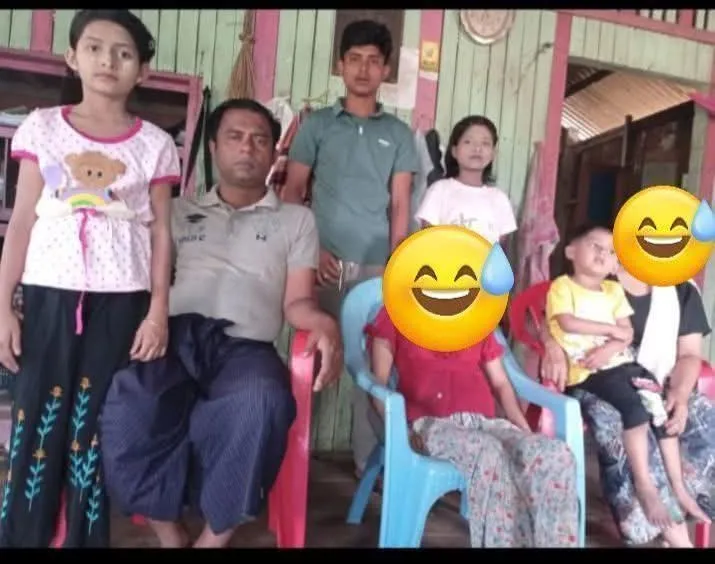
A family was reportedly killed in Zaydi Pyin Village in Rathedaung Township, leaving only two survivors, including a four-year-old child, according to local sources.
Residents said the victims included Maung Hla Min, a graduate of Sittwe University and the son of Police Nurmal Hakim. He was reportedly the main provider for his family.
According to local information, the household consisted of seven members, including three males and four females. Community members said Maung Hla Min’s eldest daughter had completed matriculation, while his second son was a Grade 11 student.
Local sources reported that the family was attacked during the night of May 24. According to residents, all family members were killed except the eldest daughter and a four-year-old boy who survived the incident.
Residents said the young child remained beside the bodies of his family members throughout the night.
According to local accounts, the boy reportedly spent hours crying next to his parents, unaware of what had happened.
The circumstances surrounding the attack and the identities of those responsible were not immediately clear.
Local residents described the incident as another tragic example of the insecurity and violence affecting civilians in parts of Arakan State.
Community members said the deaths have renewed concerns about the safety and protection of vulnerable families living in conflict-affected areas.
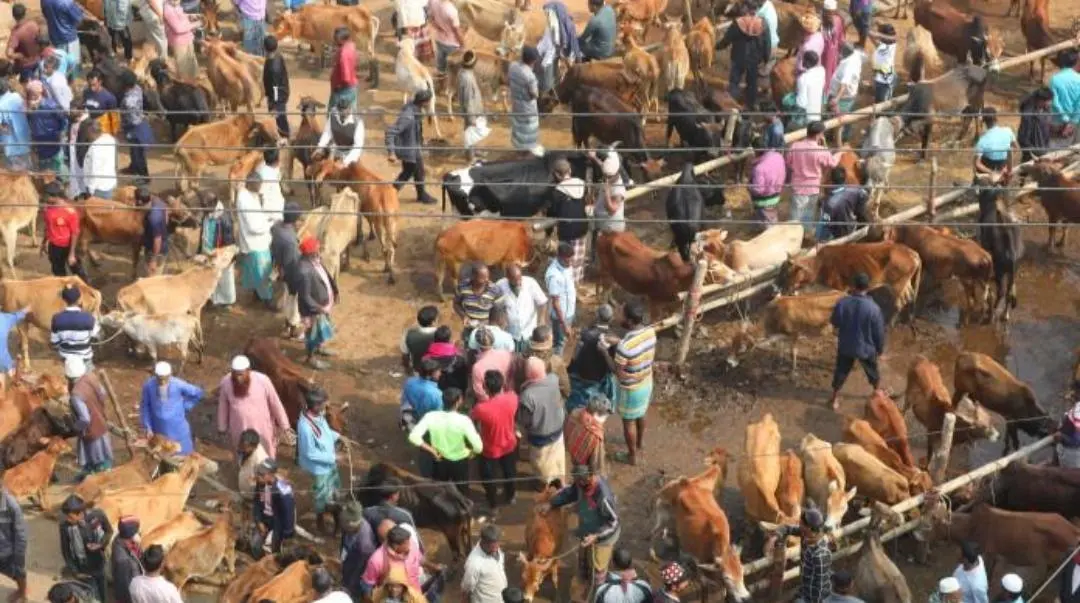
Rohingya residents in Arakan State say the Arakan Army and ULA authorities are collecting taxes and checkpoint fees from cattle traders ahead of the upcoming Qurbani festival, increasing financial pressure on local families and business owners.
According to local sources, cattle owners from different areas began bringing cows and buffaloes to markets on May 25 in preparation for the Islamic festival expected next week.
Residents said many people from different communities participate in the cattle trade during the Qurbani season.
Rohingya villagers alleged that taxes are being collected based on the selling price of each animal.
According to local residents, sellers are reportedly required to pay 5,000 kyats for every 100,000 kyats earned from the sale price.
“If we sell one cow for 1 million kyats, we have to pay 50,000 kyats as tax,” one Rohingya cattle seller told Rohingya Khobor. “The higher the price, the more money they take from us.”
Another resident said many traders are already struggling with transportation expenses and declining business conditions.
“People are already struggling with business and transportation costs,” the resident said. “Now we also have to pay tax when selling animals for Qurbani.”
Local sources further alleged that cattle transported from Buthidaung to Maungdaw face additional payments at Arakan Army checkpoints.
According to residents, buffalo owners are reportedly required to pay 100,000 kyats for each buffalo, while cow owners must pay 70,000 kyats per cow as a so-called license fee before being allowed to continue transportation.
“At the checkpoints, they stop the trucks and ask for money before allowing the animals to pass,” one Rohingya trader said. “Many sellers are worried because these costs reduce their profits.”
Residents said the additional taxes and transportation fees are creating heavier financial burdens on Rohingya families and cattle traders during the Qurbani season.
Rohingya residents in Kyauktaw Township say they are facing strict travel restrictions and cannot enter the town without obtaining approval letters from Arakan Army and ULA authorities.
According to local residents, Rohingya people are unable to move freely because checkpoints stop travelers who do not carry the required documents.
Residents said people must collect recommendation letters from multiple offices before entering the town, including the village administration office, township office, and a local police station known as “Delat.”
Villagers also alleged that they are required to pay money to obtain the documents.
According to residents, the reported fees include 5,000 kyats at the village office, 2,000 kyats at the township office, and another 5,000 kyats at the police station.
One resident said he was stopped at an Arakan Army checkpoint while travelling to town for work because he did not have the required approval letters.
He said officers refused to allow him to continue travelling, forcing him to return to his village to collect the documents.
The resident said he later had to provide personal information and pay multiple fees before receiving the approval letters.
Another resident said Rohingya people now require permission letters even to travel between villages inside the same township.
He described the process as difficult and humiliating and said many people feel heavily controlled under the restrictions.
Residents also said some people face additional difficulties because they must pass checkpoints even before reaching the offices responsible for issuing the required documents.
Local Rohingya families said the restrictions are affecting daily life, including travel for work, small business activities, and movement between villages.