Blog

  • Seven Dead, Three Injured as Landslides Strike Rohingya Camps Following Heavy Rain

    Seven Dead, Three Injured as Landslides Strike Rohingya Camps Following Heavy Rain


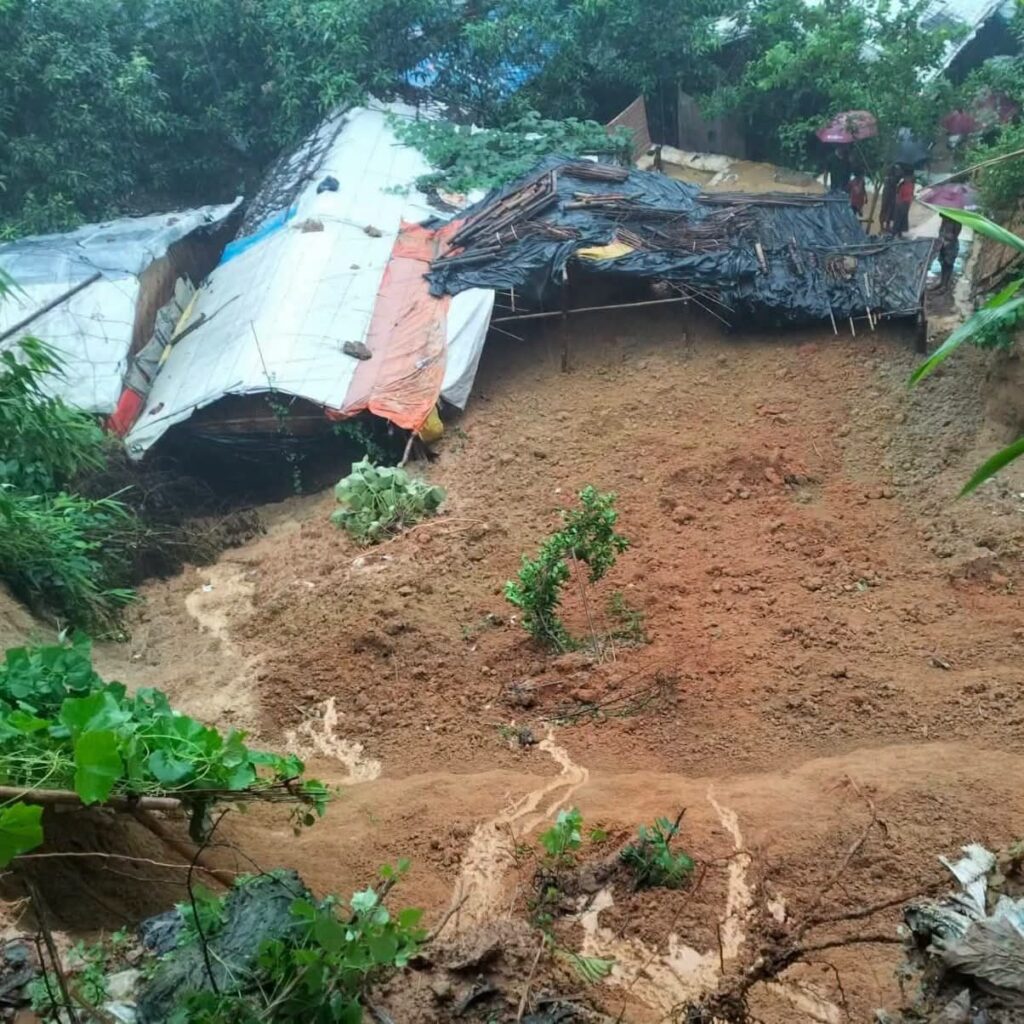
    RVISION | UKHIYA, COX’S BAZAR – A tragic series of landslides struck Rohingya refugee camps in Ukhiya early Monday morning, leaving seven people dead and three others injured following a period of persistent, heavy rainfall.

    The fatalities occurred in two separate incidents shortly after midnight on Sunday, July 6, amidst continuous downpours that battered the region. Authorities have identified three of the victims as members of the same family, while the identities of the remaining four individuals, as well as the three injured survivors, remain under investigation.

    Tragedy at Jamtoli Camp

    The first incident occurred in Block D-5 of Jamtoli Camp 15. According to Dollar Tripura, Station Officer of the Ukhiya Fire Service and Civil Defence, a landslide struck a hillside home where six family members were asleep.

    Local residents and emergency responders engaged in a desperate search and rescue operation. While bystanders managed to recover one child from the debris before the arrival of authorities, fire service personnel later recovered two more bodies and successfully pulled three survivors from the wreckage. The deceased from this location have been identified as:

    • Kamal Hossain (44)
    • Humaira Begum (39)
    • Mohammad Anos (3)

    Separate Incident at Balukhali

    In a parallel tragedy occurring around the same time, a second landslide struck Balukhali Camp 11 in Palongkhali Union. Station Officer Dollar Tripura confirmed that four additional people lost their lives in the second slide. By the time Fire Service personnel reached the site, local residents had already recovered the bodies of the four victims.

    Monsoon Risks in the Region

    The camps in Ukhiya have been experiencing intermittent moderate to heavy rainfall, which intensified significantly throughout Sunday night. The saturated soil, combined with the precarious geography of hillside settlements, has long been identified as a critical risk factor for the refugee population during the monsoon season.

    Emergency teams remain on high alert as the heavy rain continues to pose a threat to the stability of the terrain in and around the camps. Further details regarding the identities of the remaining victims are expected as the investigation continues.


    Source link

  • Rohingya Refugees Rally Ahead of UN Conference

    Rohingya Refugees Rally Ahead of UN Conference


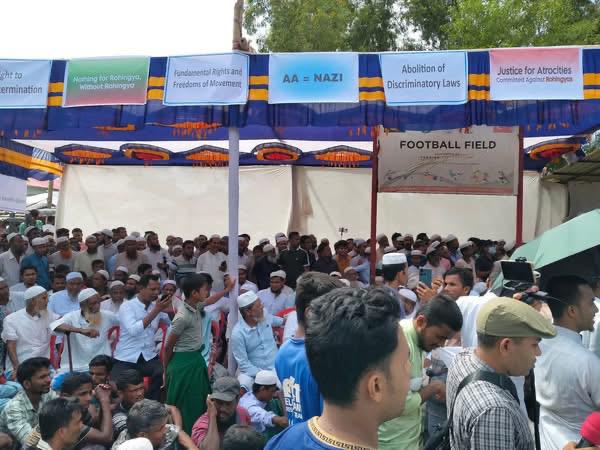
    On 27 September 2025, thousands of Rohingya refugees gathered across the camps of Cox’s Bazar, Bangladesh in one of the largest mobilizations seen in recent years. Days before the UN High-Level Conference on Rohingya in New York, the refugees came together to deliver a single, powerful message to the world: “Justice. Dignity. Safe Return.”

    The gathering took place against the backdrop of growing frustration among refugees, who have now spent more than eight years in limbo since the mass atrocities of 2017 forced them to flee from their homes in Arakan (Rakhine State), Myanmar. With dwindling humanitarian aid, worsening security conditions in the camps, and no clear roadmap for repatriation, the Rohingya community declared that they cannot continue to live in uncertainty.

    Carrying banners, chanting slogans, and addressing local and international media, Rohingya men, women, and youth made their demands clear. They called upon the United Nations, world powers, and the international community to move beyond rhetoric and deliver concrete actions that guarantee their safety, rights, and future.

    At the heart of the rally was the presentation of the Rohingya People’s Five Appeals—a united framework for what the community sees as the only path to justice and survival. These include: an internationally guaranteed Safe Zone in Northern Arakan under the Responsibility to Protect (R2P); safe, voluntary, and dignified repatriation under international supervision; the right to self-determination and political representation; justice and accountability for genocide and crimes against humanity; and rebuilding the Rohingya nation with international support for villages, schools, farms, and infrastructure.

    Speakers at the rally emphasized that the Rohingya people’s plight is not only a matter of humanitarian relief but of existential survival. “Our existence as a people is under threat,” said one community leader. “We cannot entrust our future to the same forces that destroyed our homes and families. Only international protection and justice can ensure our safe return.”

    The timing of the mobilization was deliberate. The upcoming 30 September UN conference is being billed as a crucial moment for the Rohingya crisis, where Bangladesh and other international actors hope to secure new funding commitments and a time-bound roadmap toward solutions. Refugees in the camps are determined that their voices not be left out of these global discussions. Their rally was both a show of unity and a reminder that any solution must center the voices of those most affected.

    Beyond the calls for international protection, the rally also highlighted the deteriorating conditions inside the camps. With the World Food Programme warning of severe ration cuts—potentially reducing monthly aid to just US$6 per person many refugees expressed fear that hunger and insecurity would push their community into further despair. “We cannot survive on empty promises and shrinking food,” said a Rohingya mother holding her child. “We need a future, not just survival.”

    As the world prepares to hear speeches and pledges at the UN, the Rohingya community’s message from the camps was unmistakable: they are not passive victims waiting for charity, but a people determined to reclaim their rights, their homeland, and their dignity. The rally ended with a unified call: “Our Future, Our Voice.”

    Photo: Credit

    Rohingya Vision News


    Source link

  • Missing Rohingya Boy Still Untraced Nearly Two Months After Disappearance – Rohingya Khobor

    Missing Rohingya Boy Still Untraced Nearly Two Months After Disappearance – Rohingya Khobor


    by Hafizur Rahman

    Cox’s Bazar Refugee Camp | July 4, 2026

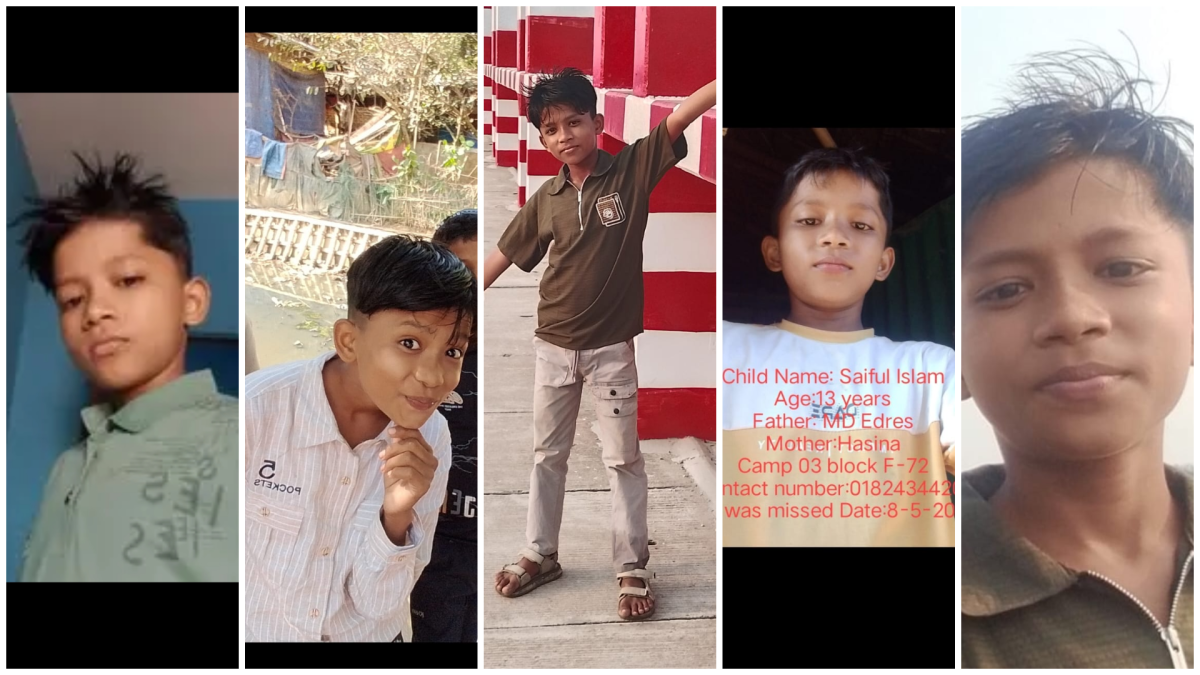
    A 13-year-old Rohingya boy who went missing from a refugee camp in Cox’s Bazar nearly two months ago remains untraced, and his family is appealing to the public for help in locating him.

    Saiful Islam disappeared on May 8, 2026, from Camp 03, Block F-72. His family says they have been searching for him ever since but have not received any confirmed information about his whereabouts.

    The family has urged residents and social media users to share Saiful’s information widely in the hope that someone may be able to help locate him.

    Anyone with reliable information about Saiful Islam is requested to contact his family immediately at 01400560724.

    Child Details

    • Name: Saiful Islam
    • Age: 13
    • Father: Md Edris
    • Mother: Hasina
    • FCN: 180293
    • Camp: 03, Block F-72
    • Missing Since: May 8, 2026
    • Majhi: Nurul Amin
    • Head Majhi: Roshid Ullah
    • Contact: 01400560724

    The family continues to hope for Saiful Islam’s safe return and urges anyone with verified information to come forward.


    Source link

  • Bangladesh Tightens Border Security as Fighting Escalates in Northern Rakhine – Rohingya Khobor

    Bangladesh Tightens Border Security as Fighting Escalates in Northern Rakhine – Rohingya Khobor


    by Hafizur Rahman

    Dhaka / Cox’s Bazar | July 3, 2026

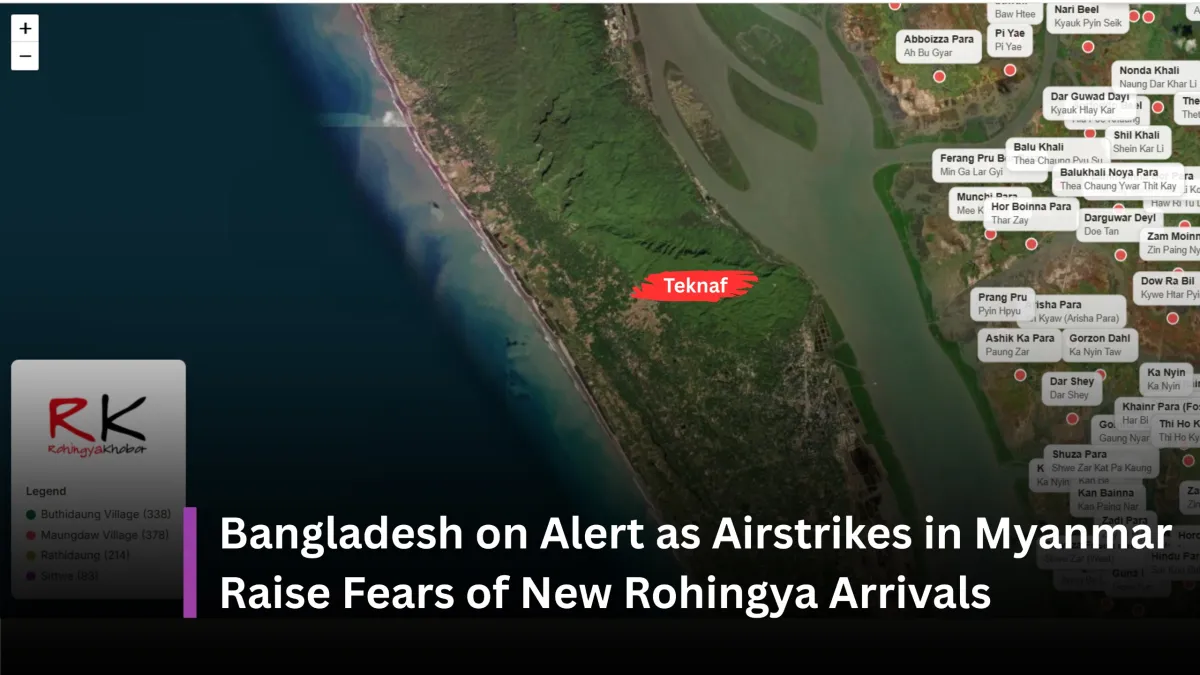
    Bangladesh has strengthened security along its border with Myanmar following a series of reported Myanmar military airstrikes in Maungdaw and Buthidaung townships, amid concerns that renewed fighting could trigger further civilian displacement.

    Rohingya refugees living in camps in Cox’s Bazar said they are closely following developments in northern Rakhine, where continuing airstrikes and armed clashes have heightened fears for civilians.

    According to local sources, tensions intensified after several members of the Arakan Army (AA) were reportedly killed in an ambush. Residents said security measures subsequently became more restrictive, increasing concerns about civilian safety.

    Residents in northern Rakhine reported that repeated airstrikes have caused widespread panic, forcing many families to seek safer locations, while others remain unable to leave conflict-affected areas.

    Local media and residents also reported multiple Myanmar military airstrikes in Maungdaw and Buthidaung over recent days. The attacks reportedly injured a Rohingya woman and two children and damaged civilian areas. Some residents believe the strikes targeted AA positions, although nearby civilian communities were also affected.

    A resident of Maungdaw told Rohingya Khobor that many families remain inside Rakhine State but fear they may have to flee if the fighting continues to intensify.

    Bangladesh border authorities said security has been reinforced after explosions were heard near the frontier. Officials said they are closely monitoring the situation and remain on alert along the border.

    Authorities also reported hearing explosions and gunfire from across the border, prompting local officials in Teknaf to advise residents living near the frontier to remain calm while staying vigilant.

    The security situation in northern Rakhine remains volatile, and humanitarian concerns continue to grow as civilians face increasing risks from the ongoing conflict.


    Source link

  • Myanmar Military Reportedly Launches Fresh Airstrikes Across Maungdaw and Buthidaung – Rohingya Khobor

    Myanmar Military Reportedly Launches Fresh Airstrikes Across Maungdaw and Buthidaung – Rohingya Khobor


    by Hafizur Rahman

    Maungdaw and Buthidaung, Rakhine State | July 2, 2026

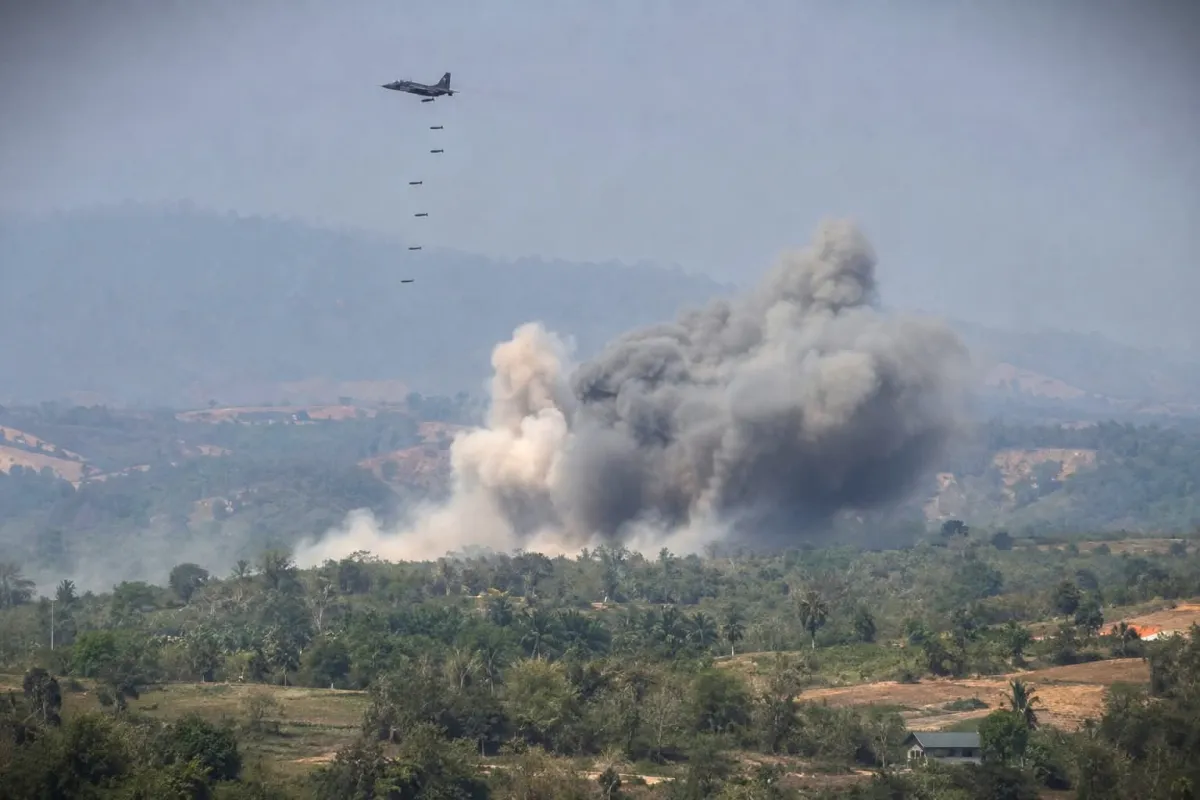
    The Myanmar military reportedly carried out a new series of airstrikes across Maungdaw and Buthidaung townships on Thursday, according to local residents, as aerial attacks continue to intensify in northern Rakhine State.

    Residents said military fighter jets and a Y-12 aircraft dropped more than 10 bombs at around 2:00 p.m. near Kyin Chaung Village, including areas east of the village and around Border Guard Police (NaKha) Battalion No. 7 near Taung Pyo Let We, close to the Bangladesh border.

    “The eastern mountains near Kyin Chaung Village and NaKha 7 were bombed,” a resident familiar with the area told local media. “We still cannot confirm whether there were casualties or the extent of the destruction.”

    Later, at around 4:50 p.m., military aircraft reportedly carried out another round of airstrikes targeting Rowa Hing Daung Village, Baguna Village, and Gho Naa Para Village in Buthidaung Township, according to local sources.

    Residents also reported that Boli Bazar in northern Maungdaw Township came under aerial attack. As of the time of reporting, casualty figures and the full extent of the damage could not be independently verified.

    “People are living in fear,” one resident said. “Aircraft were bombing last night, and today the attacks continued again. The situation has become a daily concern for civilians.”

    The latest strikes follow a series of reported air attacks in northern Rakhine State in recent days, including bombardments on July 1 in Maungdaw and Buthidaung townships that reportedly injured civilians and forced residents to flee.

    Access to the affected areas remains severely restricted, making independent verification of casualties and damage difficult.


    Source link

  • Three Injured, Including Two Children, in Airstrike on Muslim Village in Buthidaung – Rohingya Khobor

    Three Injured, Including Two Children, in Airstrike on Muslim Village in Buthidaung – Rohingya Khobor


    By Hafizur Rahman

    Buthidaung, Rakhine State | July 1, 2026

    Three Rohingya civilians, including two 12-year-old children, were injured after the Myanmar military carried out an airstrike on Kyet Mauk Taung village in Buthidaung Township on Wednesday morning. The attack also damaged nearly 10 homes, forcing families to deal with fear and destruction.

    Local residents said the attack happened at around 11:00 a.m. A fighter jet and a Y-12 aircraft reportedly dropped two 500-pound bombs near the western side of the village.

    “It was raining heavily, so we could not hear the aircraft,” one resident told Rohingya Khobor. “Then two bombs exploded one after another. Everything shook, and people started running. Two children and one older man were hurt by the bomb fragments.”

    The injured were identified as 12-year-old Soyedul Amin, 12-year-old Mohammad Aros, and 50-year-old Amin Hossain.

    Soyedul Amin suffered a broken left thigh and was seriously injured. Mohammad Aros was hit by bomb fragments in his lower abdomen, while U Amin Hossain suffered injuries above his right eye. The seriously injured child was taken to a nearby clinic for emergency treatment.

    Residents said the explosions also damaged nearly 10 houses. Homes belonging to several families were heavily affected, leaving many worried about their safety.

    “There was no fighting here,” another resident told Rohingya Khobor. “We were just living our daily lives. Now we are afraid all the time because we do not know when another airstrike might happen.”

    The attack comes only days after another reported airstrike on June 24 in Maungdaw Township, where two Grade 12 students were injured and more than 10 homes were damaged.

    People living in Buthidaung say they continue to face fear as airstrikes on civilian areas have become more frequent. Many families are struggling to protect their loved ones while also coping with damage to their homes and the constant risk of more attacks.


    Source link

  • Why Do Rohingya Continue to Risk Everything to Reach Malaysia? – Rohingya Khobor

    Why Do Rohingya Continue to Risk Everything to Reach Malaysia? – Rohingya Khobor


    A Rohingya Perspective on Displacement, Survival, and the Search for Human Dignity

    By Ro Maung Shwe

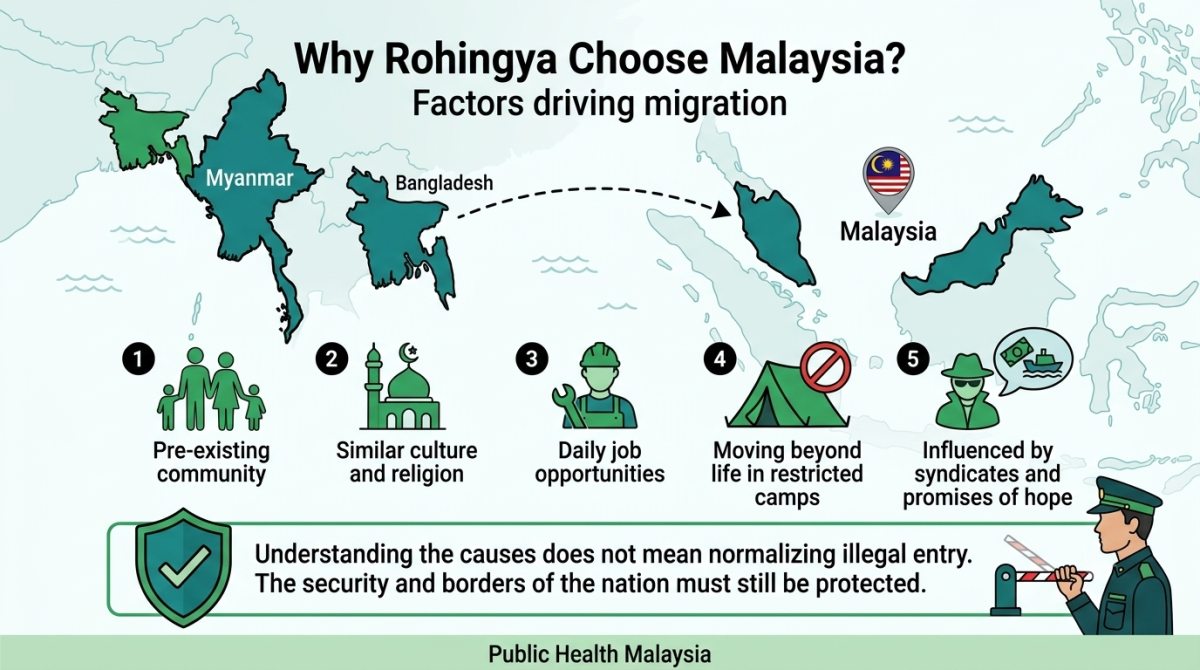
    A recent post published by the verified Facebook platform Public Health Malaysia sparked widespread discussion about the continued arrival of Rohingya refugees, reviving a question many Malaysians continue to ask:

    “Why do Rohingya continue to come to Malaysia?”

    The discussion generated thousands of reactions and comments, reflecting sympathy, concern, frustration, fear, and debate about national security, public resources, and humanitarian responsibility.

    As a member of a stateless community that has endured decades of persecution and displacement, I believe this question deserves an honest and balanced answer. The word “choose” does not accurately describe the Rohingya experience. For many Rohingya families, Malaysia was never their first choice. In fact, for many, there was never a choice at all. Malaysia became a destination not because it was easy, wealthy, or especially welcoming, but because it represented something increasingly rare for stateless people: the possibility of survival.

    The Rohingya Crisis Did Not Begin in Malaysia

    To understand why Rohingya continue to arrive in Malaysia, one must first understand the crisis that forced them to leave their homeland.

    For decades, the Rohingya have faced systematic discrimination, denial of citizenship, restrictions on movement, violence, and persecution in Myanmar. Following successive waves of displacement—particularly after the mass atrocities of 2017 and the renewed violence in northern Rakhine State in 2024—hundreds of thousands fled, primarily to Bangladesh.

    Today, Bangladesh hosts approximately one million Rohingya refugees living in overcrowded camps, creating one of the world’s largest protracted refugee situations. Yet after nearly a decade of displacement, opportunities for education, employment, and durable solutions remain extremely limited.

    For many refugees, prolonged uncertainty has created a painful question:

    If we cannot return home, and we cannot build a future where we are, where do we go?

    Malaysia: A Place to Survive, Not a Destination of Choice

    Malaysia has become one of the principal destinations for Rohingya refugees over the past three decades. According to the United Nations High Commissioner for Refugees (UNHCR), Malaysia hosted approximately 215,600 registered refugees and asylum seekers as of February 2026, including 126,144 Rohingya refugees, making them the country’s largest refugee population. These figures do not include recent unregistered arrivals.

    Many Rohingya do not see Malaysia as a land of prosperity. They see it as a place where survival remains possible.

    Several factors explain why.

    One of the strongest drivers of Rohingya migration is the existence of long-established community networks.

    Over several decades, Rohingya families have built communities across Kuala Lumpur, Penang, Johor, Selangor, and other parts of Malaysia. Relatives, former neighbors, village elders, and friends often provide information, temporary shelter, emotional support, and help finding informal work.

    When someone knows that a brother, cousin, or former neighbor has already managed to survive there, the fear of the unknown becomes slightly less overwhelming.

    A Rohingya resident in Kuala Lumpur explained:

    “We did not come because Malaysia is easy. We came because we had nowhere else to go. When we heard that people from our village were already here, we believed that perhaps we could survive too.”

    Religion, Culture, and a Sense of Belonging

    Religion and cultural familiarity also shape migration decisions.

    As a Muslim-majority country, Malaysia offers an environment where many Rohingya Muslims feel culturally and spiritually connected. Access to mosques, halal food, religious education, and familiar social customs provides a sense of belonging that many displaced families struggle to find elsewhere.

    This does not mean life in Malaysia is free from hardship. Many Rohingya continue to live in poverty, insecurity, and legal uncertainty. Yet for a stateless community, preserving identity and dignity remains deeply important.

    Escaping a Life of Permanent Waiting

    For more than one million Rohingya refugees living in camps in Bangladesh, life often feels like a state of permanent waiting.

    Many young people have spent nearly their entire lives inside refugee camps. Educational opportunities remain severely limited. Employment is almost nonexistent. Humanitarian funding continues to decline. For many families, hope itself is becoming increasingly difficult to sustain.

    One Rohingya father who previously lived in Cox’s Bazar explained his decision to leave:

    “We knew the sea journey could kill us. But staying in the camp year after year without education, work, or hope also felt like losing our future. We were searching for dignity, not luxury.”

    His words capture a reality shared by countless Rohingya families. For many, the decision to leave is not driven by economic ambition but by the absence of any meaningful future.

    The Dangerous Business of Hope

    Desperation creates opportunities for exploitation.

    Human trafficking and smuggling networks continue to profit from the suffering of Rohingya refugees by presenting Malaysia as a destination of safety, employment, and opportunity. For families trapped between statelessness and hopelessness, such promises can become irresistible.

    The consequences are devastating.

    In recent years, hundreds of Rohingya have died or disappeared while attempting dangerous sea crossings through the Bay of Bengal and the Andaman Sea. International organizations documented nearly 900 Rohingya deaths or disappearances during maritime journeys in 2025 alone, making it one of the deadliest years on record.

    For many Rohingya, the journey to Malaysia is not a search for a better life. It is a desperate attempt to avoid a future they believe offers no life at all.

    Informal Employment and Daily Survival

    Although refugees are not legally permitted to work in Malaysia, many survive through the informal economy. Construction sites, restaurants, factories, agriculture, markets, and daily wage labor have historically provided opportunities for Rohingya refugees to earn an income and support their families.

    This reality reinforces the perception among many Rohingya that Malaysia offers, at the very least, a chance to rebuild life. Yet the absence of legal status comes at a heavy cost. Refugees remain vulnerable to exploitation, underpayment, arrest, detention, and abuse—conditions that have been repeatedly documented by human rights organizations.

    For many, however, these risks are weighed against a far harsher alternative: prolonged dependency and uncertainty in refugee camps with little prospect of a stable future.

    Public Health Malaysia and the Humanitarian Debate

    The recent discussion initiated by Public Health Malaysia deserves recognition for attempting to examine the Rohingya issue through both humanitarian and public policy perspectives.

    The platform acknowledged that vulnerable populations—including refugees, women, children, older persons, and survivors of violence—require humanitarian consideration and public health protection.

    Protecting public health and protecting human dignity should not be viewed as competing objectives. Equally, acknowledging the suffering of refugees does not require ignoring the legitimate concerns of host communities.

    A meaningful discussion must recognize both realities.

    Malaysia’s Right to Protect Its Borders

    Malaysia, like every sovereign nation, has the right and responsibility to regulate immigration, protect its borders, safeguard public resources, and maintain national security.

    Recognizing the desperation of refugees does not mean irregular migration should be normalized. At the same time, understanding the Rohingya situation requires acknowledging that people flee because they are persecuted, stateless, and increasingly without alternatives.

    These realities are not mutually exclusive. A state can uphold its sovereign responsibilities while responding to humanitarian crises with fairness, dignity, and compassion.

    Rising Anti-Rohingya Sentiment

    Recent months have witnessed growing anti-Rohingya rhetoric and online hostility in Malaysia, prompting concern from human rights organizations and civil society groups.

    The Human Rights Commission of Malaysia (SUHAKAM) has warned against increasing hostility, discriminatory narratives, and the dehumanization of Rohingya communities. Human rights advocates have similarly cautioned that misinformation and hate speech risk deepening social divisions while placing already vulnerable refugees at even greater risk.

    Constructive public debate requires balancing empathy with legitimate public concerns rather than reducing a complex humanitarian crisis to simplistic narratives or stereotypes.

    This Is Not Simply a Migration Issue

    The Rohingya crisis cannot be understood solely through the lens of migration.

    It is rooted in decades of statelessness, systematic persecution, armed conflict, prolonged displacement, poverty, and the absence of durable political solutions. Human trafficking networks have exploited this desperation, while regional governments and the international community have struggled to establish sustainable pathways for protection and responsibility-sharing.

    Viewed in isolation, the arrival of Rohingya refugees in Malaysia may appear to be an immigration issue. Viewed in its full context, it is the consequence of one of the world’s longest-running and most unresolved refugee crises.

    As a Rohingya writer and observer, I believe the question should not simply be:

    “Why do Rohingya come to Malaysia?”

    Perhaps the more important question is:

    “What conditions have become so severe that thousands of stateless people continue risking their lives at sea because they believe they have no other option?”

    Until the root causes of the Rohingya crisis are addressed—including citizenship, protection, justice, accountability, and a durable political solution—the humanitarian pressures affecting Malaysia, Bangladesh, and the wider region will persist.

    For many Rohingya families, Malaysia was never the first choice. It simply became the last remaining hope.

    Ro Maung ShweRohingya Writer, Journalist, Rohingya Advocate, Political Analyst and Humanitarian Observer


    Source link

  • Rohingya Residents Allege Land Extortion and Abuse of Power by Village Administrators in Northern Maungdaw – Rohingya Khobor

    Rohingya Residents Allege Land Extortion and Abuse of Power by Village Administrators in Northern Maungdaw – Rohingya Khobor


    by Hafizur Rahman

    Maungdaw, Rakhine State | June 29, 2026

    Rohingya residents of U Shay Cha village in northern Maungdaw Township have accused local village administrators of demanding money from landowners and threatening to confiscate farmland from those who refuse to pay.

    According to residents, the village has been divided into nine administrative sections, with Abu and Maw Ti Ra Man serving as temporary village administrators.

    Residents alleged that Maw Ti Ra Man, together with Raufik from Section 1 and a Rakhine man identified as Zee Aung from Yae Myet Taung village, has been demanding payments from Rohingya landowners, including families currently living in refugee camps in Bangladesh.

    Villagers claimed that the group has been invoking the authority of the Arakan Army/United League of Arakan (AA/ULA) to pressure landowners into making payments in order to retain their farmland.

    According to residents, landowners are being asked to pay 150,000 kyats for every kani (approximately three acres) of farmland. Those who refuse or are unable to pay are reportedly warned that their land could be confiscated.

    Several villagers also accused Abu, Maw Ti Ra Man, Raufik, Baw Sir Ahmad, Shawm Shul Hakim, and Zafar of intimidating residents and abusing their positions of authority.

    “Families who fled to Bangladesh are worried about losing the land they left behind,” one resident told Rohingya Khobor. “They feel they are being forced to choose between paying money or giving up their property.”

    Residents further alleged that some current village administrators had previously worked closely with Myanmar authorities before assuming their current roles and continue to wield significant influence despite changes in local administration.

    Villagers also claimed that efforts are underway to seize several privately owned farms, including approximately 16 acres belonging to Mawlawi Sadiq, around 15 acres owned by Amir Hakim’s family, and about two acres belonging to Rawji Ullah. They further alleged that homes associated with those properties could also face demolition.

    Another resident said many people are reluctant to speak openly for fear of retaliation.

    “People are afraid to question local officials or refuse their demands because they fear punishment,” the resident said.

    Residents also alleged that some administrators routinely intimidate villagers, compel people to work at unreasonable hours, verbally abuse residents, and physically assault those found outside after 7 p.m.

    The Rohingya community has called for an independent investigation into the allegations and urged the relevant authorities to take action if any misconduct is confirmed.

    At the time of publication, neither the accused individuals nor the AA/ULA had publicly responded to the allegations.


    Source link

  • Bangladesh Expresses Hope for Progress on Rohingya Repatriation – Rohingya Khobor

    Bangladesh Expresses Hope for Progress on Rohingya Repatriation – Rohingya Khobor


    by Hafizur Rahman

    Dhaka, Bangladesh | June 28, 2026

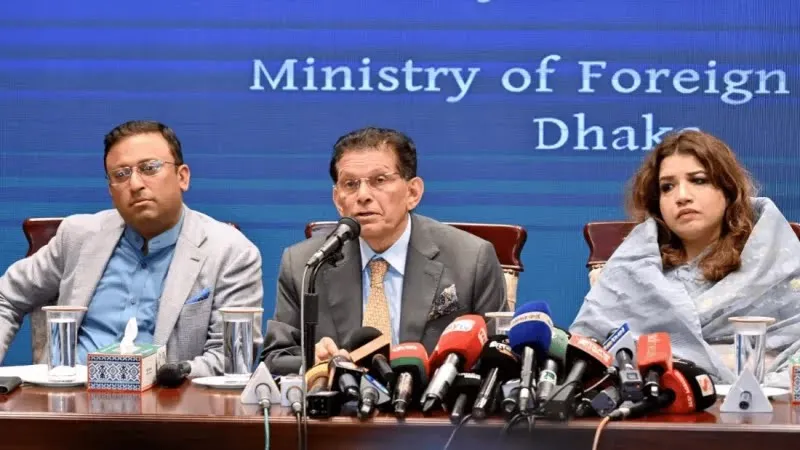
    Bangladesh has expressed optimism that progress can be made toward resolving the Rohingya crisis, with Foreign Affairs Adviser Dr. Khalilur Rahman saying the government remains committed to securing the refugees’ safe return to Myanmar.

    Speaking to reporters at the Ministry of Foreign Affairs on Saturday, Dr. Khalilur said Bangladesh would continue diplomatic efforts to achieve a durable solution to the protracted crisis.

    “I believe we will find a way to solve this problem in the coming days. The BNP government arranged the return of Rohingya refugees on two previous occasions, and we are determined to work toward a solution again,” he said.

    Dr. Khalilur said Chinese officials had recently assured Bangladesh that Beijing would continue supporting efforts to facilitate dialogue between Bangladesh and Myanmar in search of a solution.

    He added that the Rohingya crisis involves multiple stakeholders, including Myanmar, the Arakan Army (AA), Bangladesh, and the Rohingya community, and said Bangladesh has maintained communication with relevant parties.

    Bangladesh also welcomed China’s continued diplomatic engagement. According to Dr. Khalilur, Chinese officials acknowledged Bangladesh’s humanitarian support for more than 1.3 million Rohingya refugees and reaffirmed their willingness to help both countries pursue a mutually acceptable solution.

    Bangladesh has consistently maintained that the Rohingya crisis originated in Myanmar and that its only sustainable solution is the safe, voluntary, and dignified repatriation of Rohingya refugees to their homeland.

    The government says hosting more than 1.3 million Rohingya refugees for nearly a decade has placed significant economic, environmental, social, and security pressures on Bangladesh, and continues to urge the international community to intensify diplomatic efforts to create conditions for their safe return.


    Source link

  • Bangladesh Navy Seizes Two Boats Carrying Cement to Maungdaw – Rohingya Khobor

    Bangladesh Navy Seizes Two Boats Carrying Cement to Maungdaw – Rohingya Khobor


    By Hafizur Rahman

    June 27, 2026

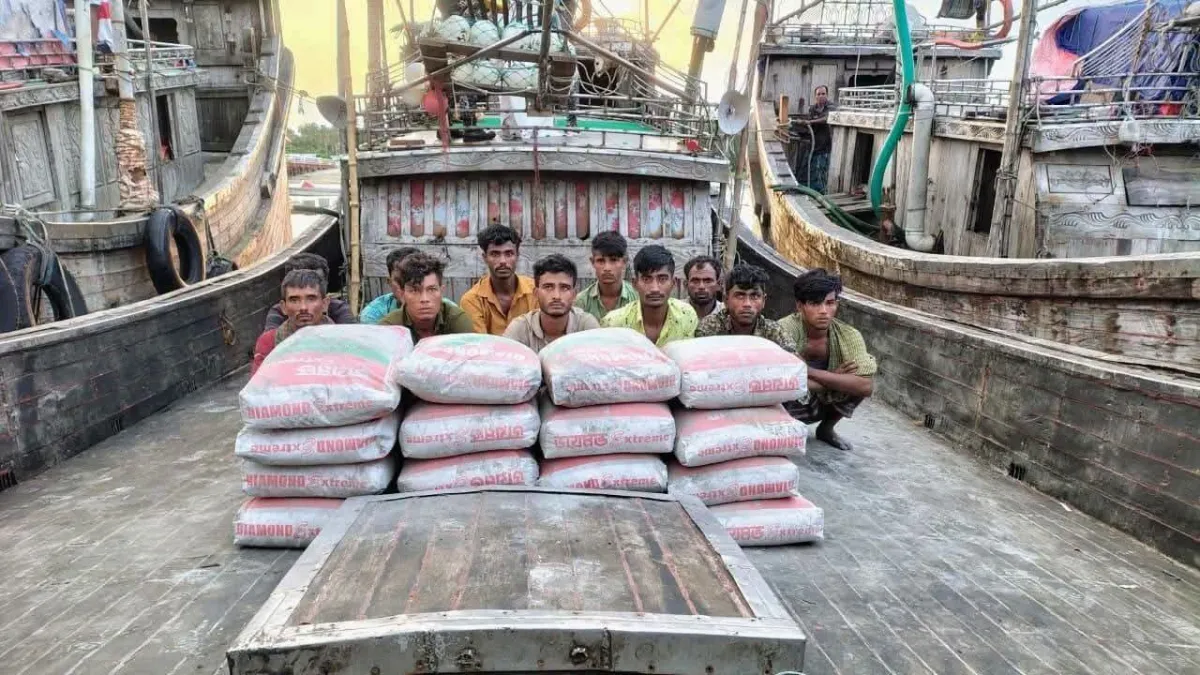
    The Bangladesh Navy has seized two fishing boats carrying 1,450 bags of cement that were reportedly being smuggled to Maungdaw Township in northern Rakhine State. A total of 21 people were also detained during the operation.

    The boats were stopped early on June 26 while the Navy was patrolling the Bay of Bengal, about 13 miles from St. Martin’s Island.

    The two wooden fishing boats, named FB Fatema Hosna and FB Nijhu Rabbi, were fitted with local engines and were allegedly heading toward Maungdaw with the cement.

    During the search, officers found 650 bags of Diamond cement and 10 people on board FB Fatema Hosna. On FB Nijhu Rabbi, they found another 800 bags of cement along with 11 people.

    In total, the Navy seized 1,450 bags of Diamond cement and detained all 21 people for their suspected involvement in the smuggling operation. The case is expected to be handled under the relevant laws.


    Source link