Author: news-admin

  • Rohingya Man Beaten to Death in Teknaf Camp After Armed Group Clash – Rohingya Khobor

    Rohingya Man Beaten to Death in Teknaf Camp After Armed Group Clash – Rohingya Khobor


    by Hafizur Rahman

    Teknaf, Cox’s Bazar, Bangladesh | May 3, 2026

    A Rohingya man was beaten to death on May 2 in Leda Camp, also known as Camp 26, in Teknaf following a reported clash between armed groups in the area, according to police and local sources.

    The incident took place around 7:00 PM. The victim, Nur Hasan, 32, was a resident of Block C-2 in the camp.

    Police said the victim had previously been accused in several criminal cases, including murder and robbery. However, local sources said he was attacked after being caught by a group of people while moving through a nearby hilly area shortly after clashes between armed Rohingya groups earlier in the day.

    He was initially taken to a health facility inside the camp and later transferred to Teknaf Upazila Health Complex, where he was declared dead at around 9:30 PM.

    Authorities said the body has been sent for post-mortem examination and that legal action is underway. Police also reported increased patrols in the area following the incident.

    Killings following armed group activity and informal enforcement have been repeatedly reported in Rohingya camps, raising concerns over security, fragmented authority, and the limited protection available to residents.


    Source link

  • Two Local Men and Five Displaced Rohingya Arrested in Buthidaung – Rohingya Khobor

    Two Local Men and Five Displaced Rohingya Arrested in Buthidaung – Rohingya Khobor


    by Hafizur Rahman

    Buthidaung, Rakhine State | May 2, 2026

    Two local villagers and five displaced Rohingya men were arrested by the Arakan Army on April 30 in Buthidaung Township, according to local sources.

    In the morning, two young men from Kyauk Hla Pyin village, also known as Auk Limma Phara, were taken during an operation by Arakan Army members. They were identified as Mahammed Hares, 17, son of U Mohammed Mia, and Jani Alam, 20, son of U Nur Hakim.

    Later in the afternoon, five Rohingya men from Doni Chaung village were also detained. The men had been living in Let Wei Det Pyin Shay village after being displaced by ongoing conflict in the area. All five were reportedly taken to a detention site operated by the Arakan Army.

    Witnesses said the men were taken from the village in front of residents, but no reason for the arrests was provided. Their current whereabouts remain unknown.

    Arrests without explanation have been repeatedly reported in parts of Buthidaung, contributing to growing fear among Rohingya communities already affected by displacement and movement restrictions.


    Source link

  • Over 11.89 Lakh Rohingyas Living in Bangladesh, Government Tells Parliament – Rohingya Khobor

    Over 11.89 Lakh Rohingyas Living in Bangladesh, Government Tells Parliament – Rohingya Khobor


    by Hafizur Rahman

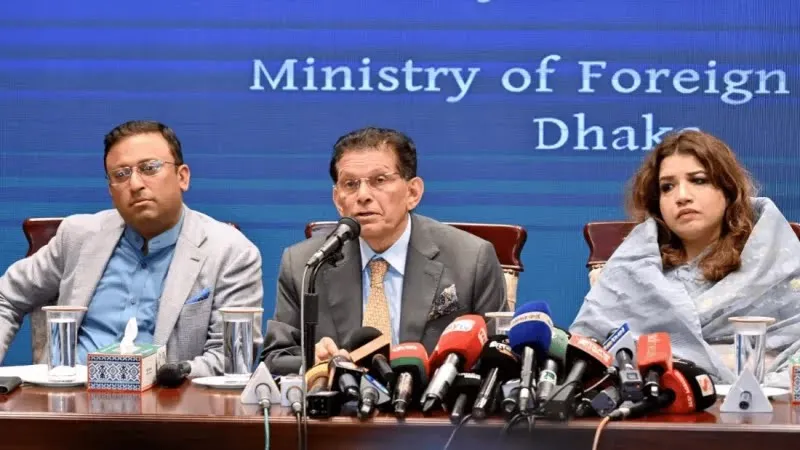
    May 1, 2026 — The government of Bangladesh has said that around 11.89 lakh Rohingya people are currently living in the country, according to information shared in Parliament on April 28.

    Foreign Minister Dr Khalilur Rahman said that, based on a UNHCR report dated April 13, 2026, a total of 11,89,213 Rohingyas who fled from Myanmar are staying in Bangladesh.

    He said the government is seeking a peaceful resolution to the Rohingya crisis and is working with the international community to ensure their safe return to Myanmar.

    The minister also noted that international legal efforts are ongoing to seek justice for Rohingya people. Cases related to crimes against them are being pursued at the International Court of Justice and the International Criminal Court, with Bangladesh providing support through information and cooperation.

    He said the government views the safe, voluntary, and dignified return of Rohingyas to Myanmar as the only long term solution to the crisis.


    Source link

  • Leadership Change Announced in United Council of Rohingya – Rohingya Khobor

    Leadership Change Announced in United Council of Rohingya – Rohingya Khobor


    by Hafizur Rahman

    Cox’s Bazar, April 30, 2026 — The United Council of Rohingya has announced a leadership transition under its rotational system, with a new Acting President taking office following the completion of a six month term.

    According to the organization, five leaders serve in rotation, each holding the position for six months. As part of this system, Sayed Ullah completed his term as Acting President, serving from October 23, 2025 to April 23, 2026. The organization acknowledged his service during this period.

    A formal handover ceremony was held on April 23 at the UCR office, where responsibilities were transferred in the presence of members and witnesses in line with the organization’s procedures.

    Following the transition, Jahangir Alam has taken over as Acting President. He began his term on April 23 and is the second member of the President Panel to serve in this role. The organization said he has the support of its executive members.

    The United Council of Rohingya said it will continue its work with collective leadership to serve the Rohingya community and welcomed the new Acting President in his role.

    The announcement has been shared with members, partners, and stakeholders of the organization.


    Source link

  • Child Killed in Incident at Camp 13 – Rohingya Khobor

    Child Killed in Incident at Camp 13 – Rohingya Khobor


    by Hafizur Rahman

    Cox’s Bazar, April 29, 2026 — A six year old child was killed after being struck by a vehicle in Block G near the SHED Nutrition Centre in Camp 13 on April 28, according to witnesses.

    Local residents said an IOM vehicle hit the child while he was walking near the centre. Witnesses reported that the child was still alive after the initial impact.

    They further alleged that the driver then reversed the vehicle and struck the child again, causing severe injuries that led to his death at the scene.

    “The child was innocent and was just walking near the centre when the accident happened. He survived the first hit but died after the vehicle came back and hit him again,” one witness said.

    The incident has caused shock, fear, and anger among residents in the camp. Witnesses said many people believe the driver is responsible for the child’s death.

    Authorities are expected to investigate the incident to determine what happened and take appropriate action.


    Source link

  • Rohingya Child Killed, Schoolgirl Seriously Injured After Shooting in Sittwe – Rohingya Khobor

    Rohingya Child Killed, Schoolgirl Seriously Injured After Shooting in Sittwe – Rohingya Khobor


    by Hafizur Rahman

    Sittwe, Rakhine State, April 28, 2026 — A Rohingya child from Maungdaw was killed and a schoolgirl seriously injured after soldiers opened fire near Sittwe on April 27, according to local reports.

    Sources said the incident is linked to a group of Rohingya who had fled from Maungdaw and Buthidaung in search of safety. On the night of April 24, the group reached the coast near Sittwe, where soldiers opened fire.

    A 7 year old boy was shot and died at the scene. A 14 year old schoolgirl was also shot and suffered serious injuries to her leg. The boy was from Maungdaw and belonged to a local family. The injured girl is a Grade 10 student from the same area.

    Reports said around a dozen Rohingya who arrived in the area have been detained at a police station in Sittwe.

    Local sources said Rohingya communities in several areas continue to face serious conditions, including arrests, forced labor, and pressure to join armed groups. Many also face discrimination based on identity and religion, along with loss of homes and land.

    Residents said that even after reaching Sittwe, many Rohingya faced further risks. There are reports that some security personnel have been questioning, detaining, and demanding money from those arriving.

    In Sittwe town, security forces are also reported to be conducting checks in areas where Rohingya are staying, particularly at night. During these operations, some residents said they were asked to pay money.

    Observers said Rohingya continue to face serious discrimination and insecurity, with concerns that people remain at risk regardless of where they go.


    Source link

  • Engineered Risk: Why Rohingya Mobility is Designed to Be Deadly – Rohingya Khobor

    Engineered Risk: Why Rohingya Mobility is Designed to Be Deadly – Rohingya Khobor


    by Abu Ammar

    In May 2025, two boats carrying more than 500 Rohingya capsized in the Bay of Bengal. Only a fraction survived. An estimated 427 people were dead or missing. For those on board, the journey was an attempt to move. For those who did not survive, it was the endpoint of a system in which movement itself has become a site of lethal exposure.

    These deaths are often described as tragedies of migration. That framing is insufficient. The pattern across sea routes, land borders, and internal restrictions suggests something more structured: a condition in which mobility is not simply dangerous, but predictably so.

    Mobility Under Constraint

    Rohingya movement is defined first by restriction. In Rakhine, movement is tightly controlled through checkpoints, travel permits, and the risk of arrest. The UK Home Office country policy note from 2026 documents a system in which Rohingya must obtain authorization to move between locations, often at a cost, and face penalties for noncompliance. These restrictions limit access to work, healthcare, and basic survival needs.

    In Bangladesh, the constraints take a different form but produce a similar outcome. Rohingya refugees are confined to camps and lack formal legal status. According to UNHCR’s 2025 country profile, restrictions on movement and employment prevent refugees from accessing livelihoods or relocating safely. The camps function as sites of containment rather than spaces of mobility.

    Across both contexts, movement is not an ordinary activity. It is regulated, restricted, and frequently penalized. The result is a narrowing of legal and safe pathways through which Rohingya can move.

    From Restriction to Exposure

    When formal movement is blocked, mobility does not cease. It shifts. Rohingya who cannot move legally turn to irregular routes, where the risks are significantly higher. This shift is not accidental. It is the predictable consequence of a system that restricts lawful mobility while leaving irregular pathways as the only alternative.

    UNHCR reported that nearly 900 Rohingya were dead or missing at sea in 2023, the highest number recorded since 2017. The scale of these deaths indicates that maritime movement is not a marginal phenomenon. It is a central feature of Rohingya mobility under constraint.

    The data from 2025 reinforces this pattern. The International Organization for Migration estimated that over 5,000 Rohingya attempted sea journeys that year. These are not isolated decisions made under exceptional circumstances. They reflect sustained, large-scale movement driven by structural conditions.

    Land routes are similarly dangerous. The Office of the High Commissioner for Human Rights has reported continued landmine casualties along the Myanmar Bangladesh border, affecting Rohingya attempting to cross conflict zones. Movement across land is therefore not only restricted but physically hazardous, with risks embedded in the terrain itself.

    The outcome is a system in which movement leads to exposure. Whether by sea or land, the act of moving becomes inseparable from the possibility of death or injury.

    Irregular Movement as a Forced Condition

    Humanitarian agencies consistently emphasize that Rohingya maritime journeys are not voluntary migrations in the conventional sense. UNHCR and IOM describe them as movements driven by desperation, lack of alternatives, and deteriorating conditions. This framing shifts the focus from individual choice to structural compulsion.

    The absence of legal pathways is central to this dynamic. There are no large-scale mechanisms for resettlement, labor migration, or safe cross-border movement available to Rohingya. Without recognized citizenship, they cannot access the legal frameworks that facilitate movement for other populations.

    In this context, irregular migration is not a deviation from normal mobility. It is the only available form of mobility. Smuggling networks emerge not simply because they exploit demand, but because they occupy a vacuum created by the absence of legal options.

    The criminalization of movement reinforces this condition. Rohingya who attempt to move without authorization risk arrest, detention, or deportation. Receiving countries in the region often classify arrivals as irregular migrants rather than asylum seekers, limiting access to protection mechanisms. This approach treats movement as a violation rather than a response to structural constraints.

    The result is a system in which Rohingya are compelled to move through channels that are both illegalized and dangerous. The risk is not incidental. It is built into the available options.

    The Geography of Lethality

    The physical routes available to Rohingya further intensify the risks associated with movement. Sea journeys across the Bay of Bengal and the Andaman Sea are inherently hazardous. Overcrowded boats, inadequate supplies, and exposure to harsh conditions contribute to high mortality rates. The 2023 figure of nearly 900 dead or missing at sea reflects these structural vulnerabilities.

    Land routes are shaped by conflict and militarization. The presence of landmines along the Myanmar Bangladesh border introduces a persistent risk of injury or death for those attempting to cross. OHCHR reporting indicates that these risks continue despite the well-documented impact on civilians.

    Movement for medical reasons highlights another dimension of this geography. Médecins Sans Frontières reported treating over 100 war-wounded Rohingya who crossed into Bangladesh in 2024. These crossings were not elective. They were driven by the need for urgent care that was unavailable or inaccessible in Rakhine. Even in such cases, movement occurs under conditions of danger.

    The geography of Rohingya mobility is therefore not neutral. It is structured in ways that amplify risk, whether through environmental hazards at sea or militarized landscapes on land.

    Containment Without Protection

    The policies that shape Rohingya mobility can be understood as forms of containment. In Bangladesh, restrictions on movement and employment confine refugees to camps. In Myanmar, checkpoints and permits regulate internal movement. Across the region, border controls limit cross-border mobility.

    These measures are often justified in terms of security or administrative control. However, they operate without corresponding protection mechanisms. There are no comprehensive regional frameworks for search and rescue at sea or for the disembarkation and processing of Rohingya arrivals. ASEAN coordination on these issues remains limited.

    The absence of protection is evident in the outcomes. High mortality rates at sea, continued landmine casualties, and reliance on smuggling networks all point to gaps in the system. Humanitarian agencies have repeatedly highlighted the need for safe and regulated pathways, yet such mechanisms remain largely absent.

    This gap between control and protection is central to understanding the production of risk. Containment policies restrict movement without providing alternatives, effectively channeling mobility into dangerous routes.

    Governance Failure and Distributed Responsibility

    The risks associated with Rohingya mobility are often attributed to traffickers or the inherent dangers of migration routes. While these factors are relevant, they do not fully account for the structure of the problem.

    The broader system involves multiple actors. In Myanmar, statelessness and persecution limit internal mobility and push people to flee. In Bangladesh, camp-based policies restrict movement and livelihoods. At the regional level, receiving countries emphasize border control over asylum access. Internationally, the absence of large-scale resettlement or labor mobility schemes leaves few legal options.

    Each of these elements contributes to a system in which risk is produced and sustained. Responsibility is therefore distributed. It cannot be assigned solely to those who facilitate irregular movement.

    The concept of mobility as a site of governance failure captures this dynamic. The inability or unwillingness of states and international systems to provide safe pathways results in a situation where movement itself becomes hazardous. The persistence of high mortality rates, particularly at sea, indicates that this failure is ongoing.

    Escalating Pressures and Emerging Risks

    Recent trends suggest that the risks associated with Rohingya mobility may intensify. Rising mortality rates at sea indicate that journeys are becoming more dangerous or that conditions are deteriorating. The expansion of trafficking networks reflects sustained demand for escape routes.

    Humanitarian pressures are also increasing. Funding shortfalls have led to reductions in food rations and services in refugee camps, as reported by the World Food Programme in 2025. These reductions can act as push factors, increasing the incentive to undertake risky journeys.

    At the same time, conflict and insecurity in Rakhine continue to drive displacement. Forced recruitment, violence, and lack of access to services contribute to conditions where remaining in place is not viable for many.

    The persistence of landmine risks along border areas adds another layer of danger. As long as these hazards remain, land-based movement will continue to involve significant risk.

    These trends point toward a consolidation of the current system rather than its resolution. The factors that produce risk are not diminishing. In some cases, they are intensifying.

    Conclusion

    Rohingya mobility is often framed as a humanitarian crisis defined by dangerous journeys. This framing captures the outcomes but not the structure that produces them. The evidence indicates that risk is not incidental to Rohingya movement. It is engineered through a combination of restriction, absence of legal pathways, and inadequate protection.

    Movement is constrained within Myanmar and Bangladesh, leaving irregular routes as the primary option. These routes, whether by sea or land, are characterized by high levels of danger. Policies that prioritize containment without providing alternatives channel mobility into these spaces of risk.

    Understanding this dynamic requires shifting the focus from individual journeys to the systems that shape them. The question is not only why Rohingya take dangerous routes, but why safe routes are unavailable.

    Until that question is addressed, mobility will remain a site where risk is not only encountered but systematically produced.


    References

    UNHCR, Dangerous Maritime Movements in South and South-East Asia, 2024–2025.
    UNHCR, Bangladesh Country Profile, 2025.
    OHCHR, Situation of human rights in Myanmar, 2025.
    International Organization for Migration (IOM), Intraregional Mixed Movements Factsheet, 2025.
    Médecins Sans Frontières (MSF), Severe spike in arrivals of war-wounded Rohingya, 2024.
    World Food Programme (WFP), Funding and ration reduction warnings, 2025.
    UK Home Office, Myanmar: Rohingya Country Policy Note, 2026.
    Reuters, Rohingya boat disaster and deaths at sea, May 2025.
    Associated Press (AP News), Rohingya arrivals and regional response, 2025.


    Source link

  • Rohingya Owned Hotel Burned in Buthidaung – Rohingya Khobor

    Rohingya Owned Hotel Burned in Buthidaung – Rohingya Khobor


    by Hafizur Rahman

    Buthidaung, Rakhine State, April 26, 2026 — A Rohingya owned hotel known as President Guest House was burned on Sunday evening around 6:00 PM in Ward 2 near the Khuason area of Buthidaung Township.

    According to local residents, the hotel had been taken over by the Arakan Army after it gained control of the town. Since then, only Arakan Army members had been staying in the building, and Rohingya civilians were not allowed to enter.

    Witnesses said they saw the building on fire in the evening, but the cause of the fire remains unclear. There has been no official statement from the Arakan Army regarding the incident.

    Residents said the incident has increased fear among Rohingya families, who are already facing difficult conditions due to ongoing tensions in the area.

    More information is expected as the situation develops.


    Source link

  • Rohingya Gen-Z Releases Report Raising Concerns Over Camp Gathering – Rohingya Khobor

    Rohingya Gen-Z Releases Report Raising Concerns Over Camp Gathering – Rohingya Khobor


    by Ro Maung Shwe

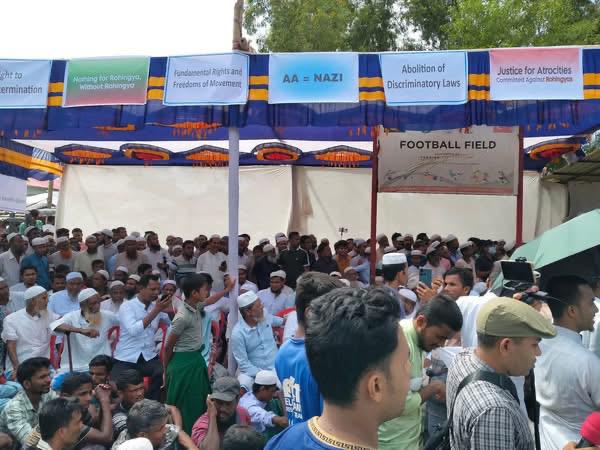
    Cox’s Bazar, April 26, 2026 — Rohingya Gen-Z, a youth led community group, has released an analytical report highlighting concerns about a gathering held on April 25 in Camp 13, focusing on participation trends and the situation of youth within the camps.

    According to the report, participation by students, youth, and educated individuals was noticeably lower compared to previous gatherings. It stated that attendance was largely made up of other community members, suggesting a shift in engagement among younger groups.

    The report includes allegations based on testimonies from participants. These include claims of pressure to attend through local administrative structures, as well as reports of financial incentives ranging from 100 to 250 BDT. It also mentions alleged threats toward youth and instructions given to students and teachers to ensure attendance.

    Rohingya Gen-Z raised concerns about whether participation in the gathering was voluntary, citing reports of intimidation, restricted movement, and visible discomfort among attendees.

    The report said such conditions may contribute to fear within the camps, particularly among youth and educated individuals.

    In its conclusion, the group stressed the need for transparency, accountability, and credible leadership in addressing long term community goals, including peace and repatriation. It also reaffirmed its commitment to non violence, independence, and ethical responsibility.


    Source link

  • Two Rohingya Men Released from Prison in Buthidaung – Rohingya Khobor

    Two Rohingya Men Released from Prison in Buthidaung – Rohingya Khobor


    by Hafizur Rahman

    Buthidaung, Rakhine State, April 27, 2026 — Two Rohingya men were released from a prison camp in Buthidaung Township on April 24, according to local sources.

    The release took place at the Young Chaung prison camp, which is controlled by the Arakan Army.

    The men have been identified as Ibrahim, 53, son of Mokholos, and Md Hoson, 27, son of Abul Kasim. Both are from Kenothi village.

    Sources said the two men had been arrested earlier over alleged links to the Arakan Rohingya Salvation Army.

    There is no further information about the length of their detention or the conditions they faced while in custody. Their release has brought some relief to their families and community members.

    Residents said they are continuing to monitor the situation as tensions remain in the area.


    Source link