Recent discussions surrounding the Rohingya community in Malaysia have generated strong emotions and differing opinions. As debates continue across social media and news platforms, it is more important than ever that public discourse remains balanced, informed, and guided by both facts and humanity.
For decades, Malaysia has provided refuge to tens of thousands of Rohingya Muslims fleeing one of the world’s longest-running humanitarian crises. Although Malaysia is not a signatory to the 1951 Refugee Convention, it has nevertheless opened its doors to people escaping persecution, violence, and statelessness. This humanitarian tradition has earned Malaysia respect both regionally and internationally.
At the same time, it is entirely understandable that many Malaysians have genuine concerns. Questions surrounding employment, public services, security, undocumented migration, and social integration deserve open, honest, and responsible discussion. Every sovereign nation has the right to enforce its laws and safeguard the welfare of its citizens. Acknowledging these concerns is not an act of hostility it is part of responsible governance.
Equally, the Rohingya community must recognise that preserving Malaysia’s social harmony and humanitarian reputation is a shared responsibility. Every act of good character strengthens public trust, while every act of misconduct—by anyone—risks harming both the community and Malaysia’s long-standing tradition of compassion.
However, it is equally important to distinguish between legitimate policy discussions and broad generalisations about an entire community. The actions of a small number of individuals should never define hundreds of thousands of people. Such generalisations risk creating prejudice against families who have committed no wrongdoing and who are themselves victims of persecution, particularly when there are many valid and well-documented reasons behind their displacement.
Most Rohingya families did not leave their homeland by choice. For decades, they endured systematic discrimination, atrocity crimes, denial of citizenship, and severe restrictions on education, healthcare, freedom of movement, marriage, and employment. Generations were intentionally deprived of opportunities that most societies consider basic human rights. From the years following Myanmar’s independence in 1948 through successive military operations culminating in the atrocities of 2017, countless Rohingya families lost parents, children, and loved ones to violence, displacement, and persecution. These experiences have left deep psychological, social, and economic scars that continue to affect the community today.
Like refugees everywhere, the overwhelming majority of Rohingya aspire to simple things: to live in safety, educate their children, earn an honest living where opportunities permit, and one day return to their homeland with dignity, equal citizenship, and lasting peace.
The Rohingya community also bears important responsibilities. Every refugee should respect Malaysian laws, honour local customs and traditions, avoid involvement in crime, and strive to contribute positively to society wherever possible. Community leaders have a crucial role in encouraging education, lawful conduct, and good relations with the wider Malaysian public. Good character is often the strongest response to misunderstanding.
Likewise, media organisations, public figures, and social media users share a responsibility to ensure that information is accurate and presented responsibly. Sensational headlines, misinformation, and inflammatory rhetoric may attract attention, but they can also deepen fear, fuel hatred, and undermine social harmony. Responsible journalism should distinguish verified facts from rumours and avoid portraying isolated incidents as representative of an entire community.
It is also important to recognise that the information environment surrounding the Rohingya issue has, for many years, been influenced by organised disinformation. Researchers, journalists, and international human rights organisations have documented online propaganda and coordinated campaigns linked to pro-military networks in Myanmar that have sought to dehumanise the Rohingya and spread false narratives about them. Such misinformation has often travelled across borders through social media, shaping public perceptions far beyond Myanmar itself. This serves as a reminder that viral content should always be approached critically and verified before being accepted or shared.
At the same time, all parties should remain mindful that any mistreatment of refugees or the spread of hatred against vulnerable communities can also be be exploited by those seeking to tarnish Malaysia’s international image. Malaysia has long been recognised for its humanitarian spirit and compassion. Preserving that reputation requires wisdom, restraint, and a commitment to justice from both Malaysians and the refugee communities living among them.
Islam teaches justice even when emotions run high. Allah says:
“O you who believe! Stand firmly for justice, as witnesses to Allah, even if it be against yourselves or your parents and relatives.” (Qur’an 4:135)
Justice requires that we neither ignore legitimate public concerns nor abandon compassion for those who have suffered. These two principles are not contradictory—they complement one another.
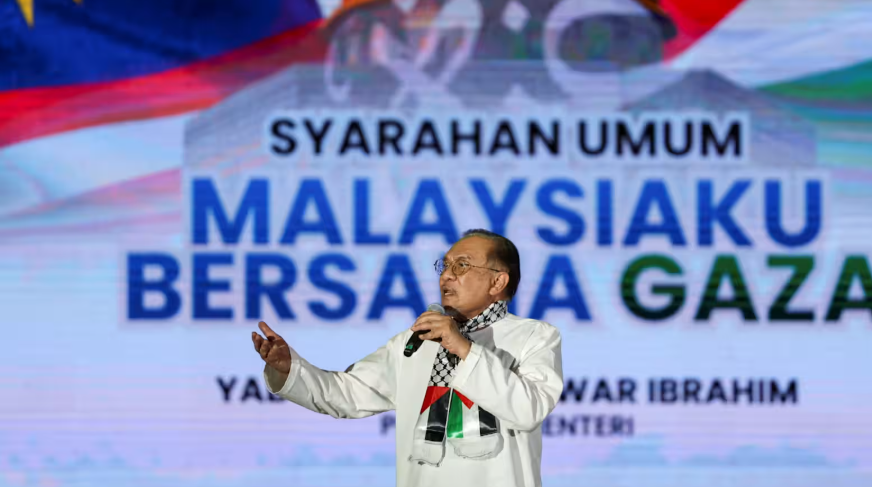
The recent remarks by Prime Minister Datuk Seri Anwar Ibrahim illustrate just how complex this issue truly is. While reaffirming Malaysia’s humanitarian commitment to people fleeing persecution, he also reminded Rohingya refugees that they must respect Malaysian laws and regulations and that those who violate the law will face appropriate enforcement. At the same time, he acknowledged that calls to simply “send them back” overlook the reality that repatriation remains impossible while Myanmar continues to deny safe and dignified return. He further urged Malaysians to uphold humanity and allow the authorities—not public emotion—to address the matter through the rule of law.
His message reflects the balanced approach Malaysia has consistently sought to maintain: compassion without compromising the rule of law, and firm enforcement without abandoning humanitarian values.
The Rohingya crisis did not begin in Malaysia, nor can it be solved by Malaysia alone. Its roots lie in decades of statelessness, discrimination, and conflict within Myanmar. Any lasting solution will require genuine political change in Myanmar, regional cooperation, and stronger international commitment to addressing the root causes of displacement.
Ultimately, Malaysians and Rohingya alike seek peaceful communities, secure families, and hopeful futures. Building trust will require effort from everyone government, civil society, community leaders, the media, and refugees themselves.
Malaysia’s strength has never been measured solely by its ability to enforce the law, but also by its ability to uphold justice with wisdom and compassion. By rejecting hatred, resisting misinformation, respecting the rule of law, and remembering our shared humanity, Malaysians and Rohingya alike can contribute to a society that is both secure and compassionate. In doing so, Malaysia will continue to demonstrate that security and humanity are not opposing ideals, but complementary values that strengthen the nation and preserve its proud humanitarian legacy.
Author Bio : Farid Abu Ahmed, Independent writer from Malaysia (farid_br@yahoo.com)
* This represents the writer’s own opinion only it doesn’t necessarily reflect organizational stance.*
Leave a Reply